What Is PLA? The Plant-Based Plastic Behind (Almost) Everything We Print
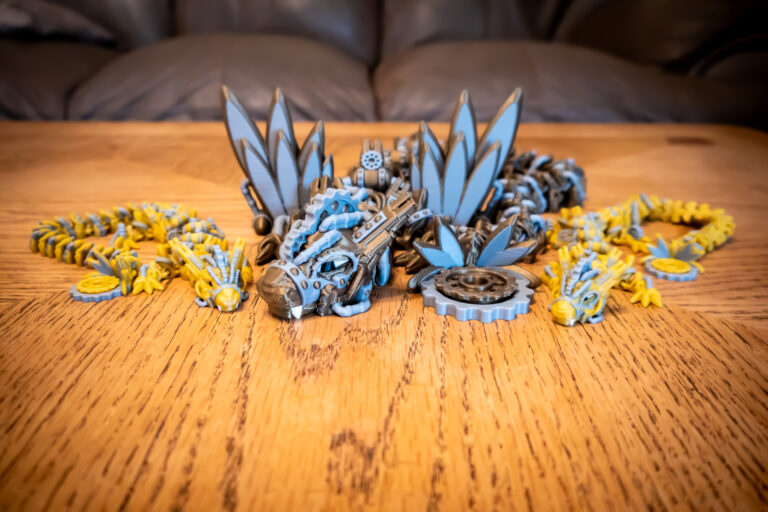
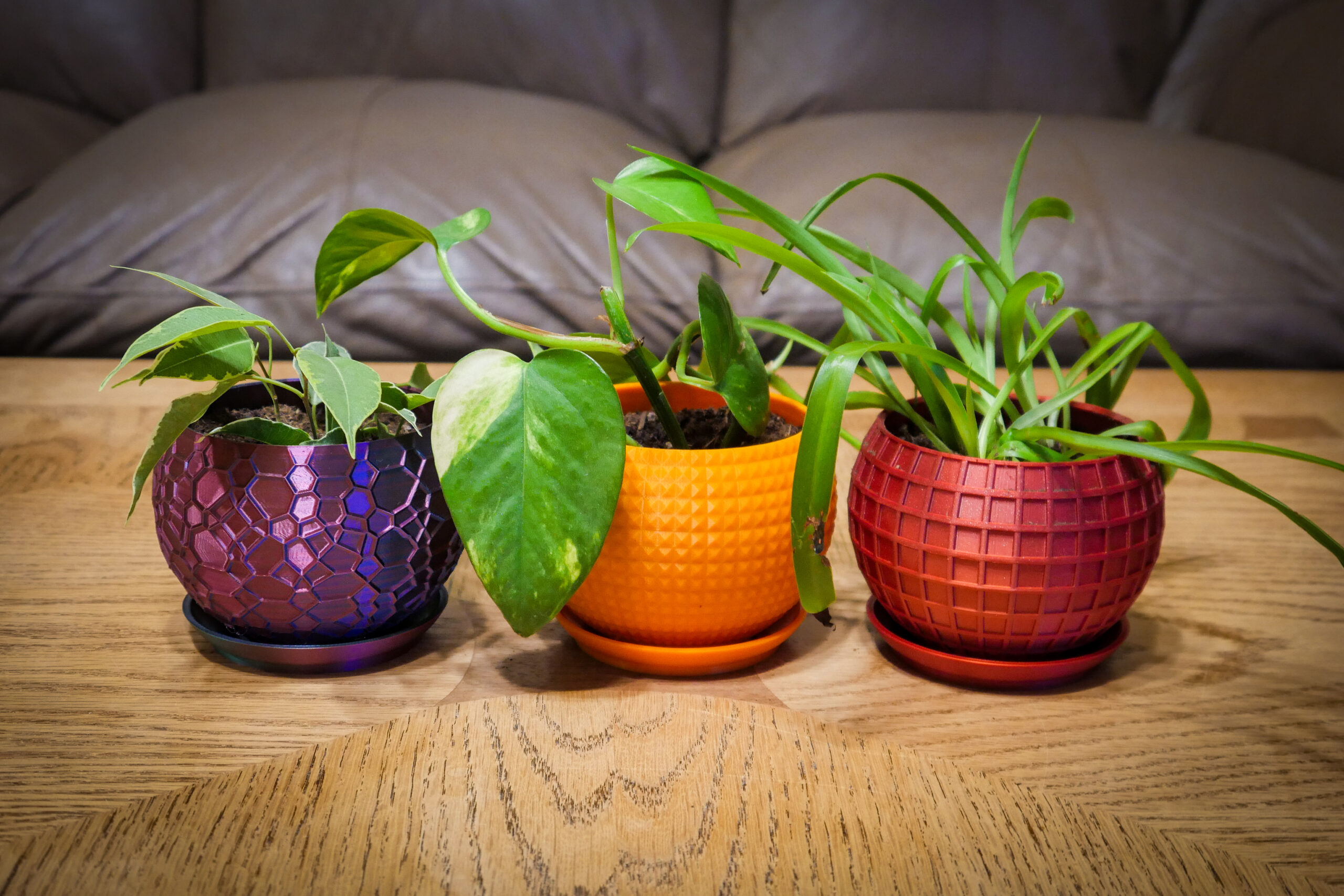
Pick up anything we have ever shipped — a desk sign with an attitude problem, a textured planter, a dragon with an alarming number of moving parts — and you are holding PLA plastic. It is the material behind nearly everything we print, and it has a stranger origin story than you would guess: it starts in a cornfield. Here is everything you ever wanted to know about the stuff, plus several things you never asked.
What is PLA plastic, exactly?
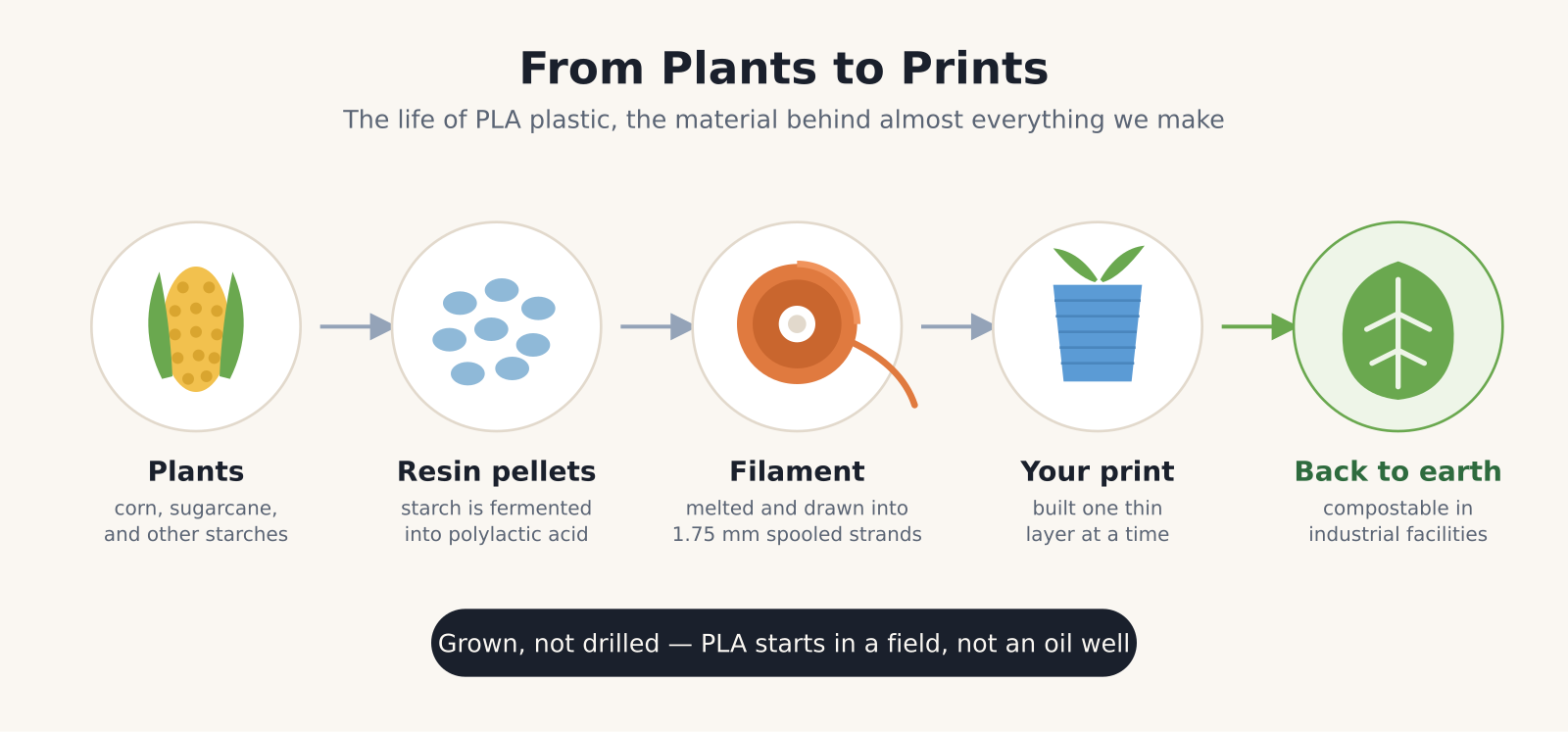
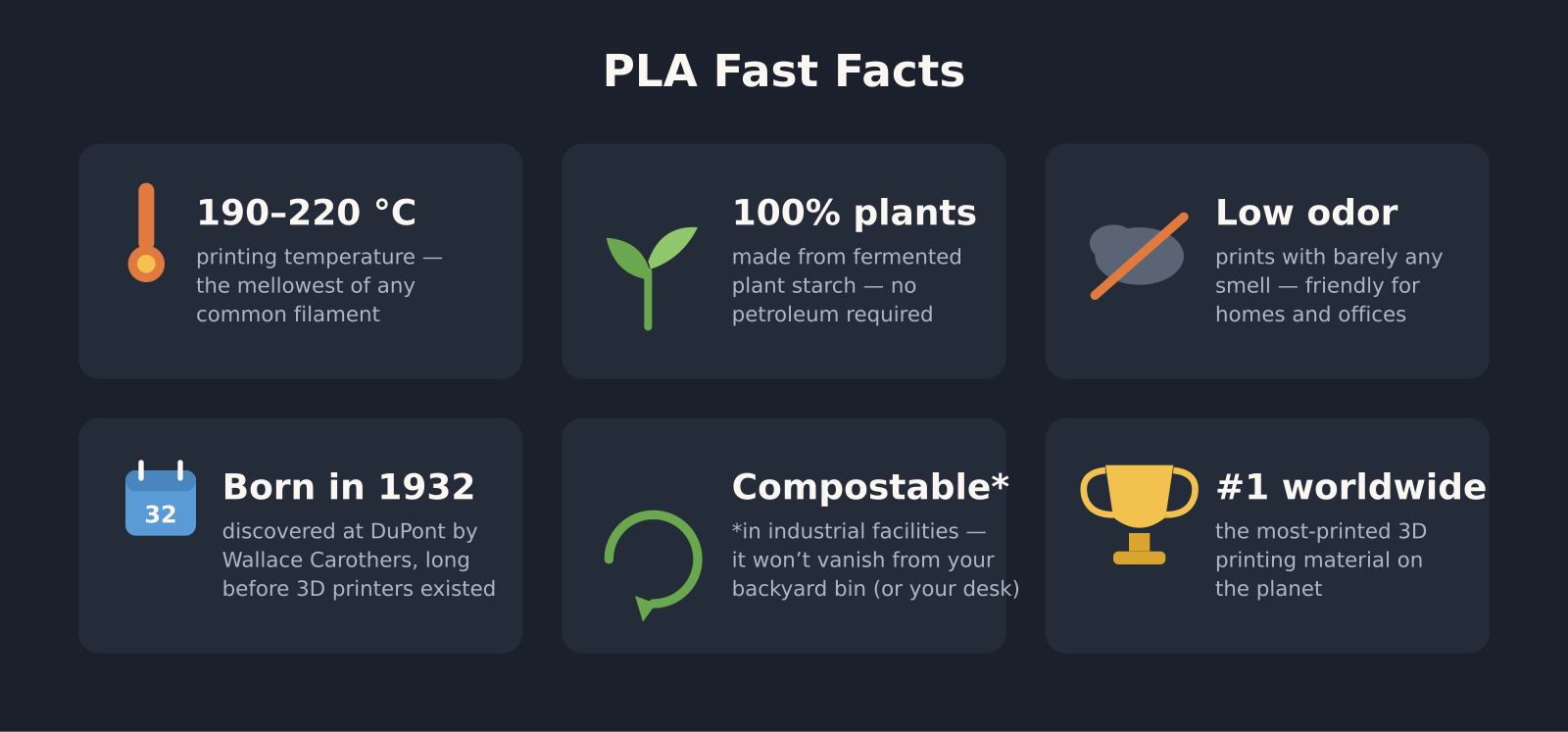
PLA stands for polylactic acid, and it breaks the first rule you learned about plastic: it does not come from petroleum. PLA is made from plant starch — mostly corn here in the US, sugarcane elsewhere. Microbes ferment the starch into lactic acid, chemists link those molecules into long chains, and the result gets pressed into little pellets that are later melted and drawn into the 1.75 mm filament our printers eat all day long.
The material itself is surprisingly old. It was first synthesized in 1932 by Wallace Carothers at DuPont — the same chemist who gave the world nylon — but for decades it was too expensive to make for anyone to care. It took until the 1990s for production to get cheap enough, at which point PLA quietly became the star of an industry that did not exist yet.
Why our print farm runs on it
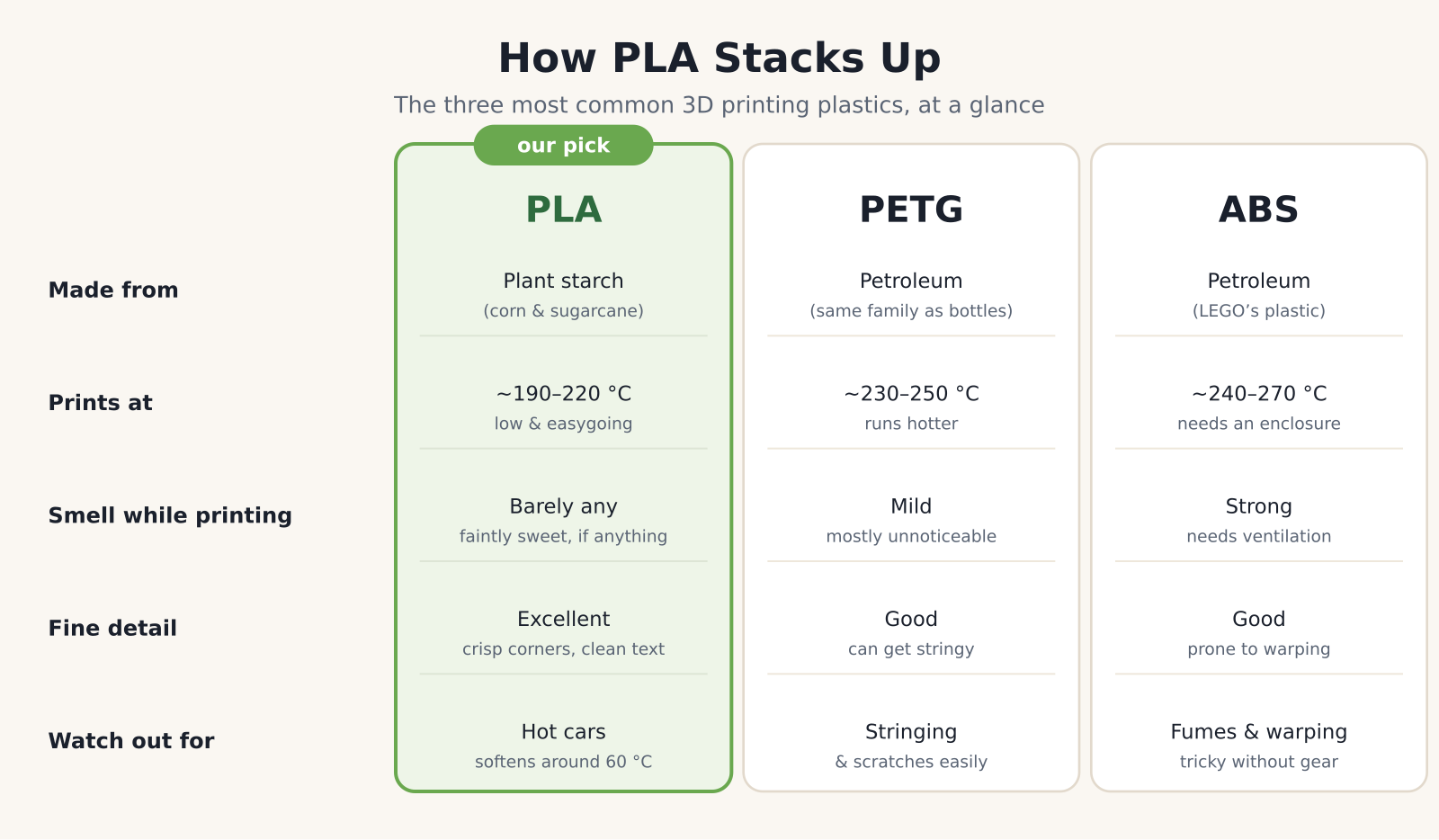
A print farm is a room where a lot of printers run for a lot of hours, and where a human also has to breathe. That rules out some materials fast. PLA prints at a mellow 190–220 °C, does not need a heated enclosure, does not warp itself into modern art halfway through a job, and produces barely any smell — faintly sweet, if anything. Some people say pancakes. We will not confirm or deny.
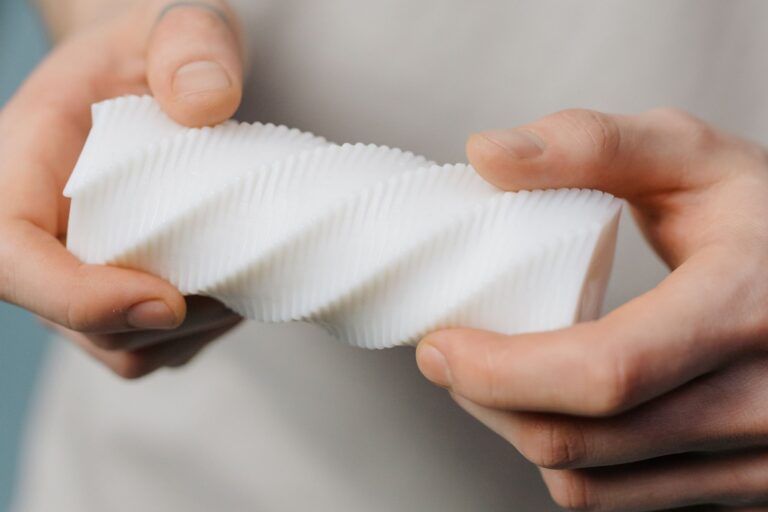
Just as important for us: PLA holds detail beautifully. Crisp lettering on a sarcastic desk sign, hinges that survive being printed fully assembled inside a steampunk dragon, the tiny folds on a baby corgi’s face — that is all PLA behaving itself, print after print. When your business is running the same jobs hundreds of times, boring reliability is the most exciting feature there is.
PLA vs. ABS vs. PETG
The other two plastics you will hear about are ABS and PETG. ABS is the stuff LEGO bricks are made of — genuinely tough, but it prints hot, it warps, and it releases fumes that want real ventilation. PETG is a cousin of the plastic in water bottles: a bit tougher than PLA and happier in the heat, but stringy to print and softer on fine detail. For the things we make — display pieces, fidget toys, planters — PLA wins on looks and precision, which is the whole point.
Is PLA safe? Is it actually eco-friendly?
Safe: yes. Of all the common 3D printing materials, PLA has the lowest printing emissions, which is exactly why it is the default for printers that live in homes, classrooms, and offices — and why we are comfortable printing the things that sit on your desk out of it.
Eco-friendly: mostly yes, with an honest asterisk. PLA plastic starts from crops instead of crude oil, which is a real head start. And it is compostable — but only in industrial composting facilities, the kind that hold everything at high heat with specialized microbes for weeks. Tossing a print in your backyard bin will mostly teach you patience. The flip side of that asterisk is good news, though: your prints will not decompose on your desk, either. They are in no hurry to go anywhere.
How to keep PLA prints happy
PLA asks almost nothing of you, with one exception: heat. It starts to soften around 60 °C (140 °F), a temperature the inside of a parked car clears with enthusiasm every July. So: no dashboards, no dishwashers, no sunny windowsills in August. Everywhere else — desks, shelves, offices with functioning air conditioning — a PLA print will sit there looking sharp for years, asking only for the occasional dusting. Your planter can even handle watering just fine; PLA does not mind moisture, only saunas.
So there it is: the plant that became a pellet that became a filament that became the articulated dragon guarding your monitor. Next time someone picks up one of your prints and asks what it is made of, you get to deliver one of the great underrated flexes of our time: “That used to be corn.”